Sunday, 9 August 2015

Coding and more...

This week I attended at PLD event hosted by Noel Leeming. I had heard about Osmo before on Twitter, but it was exciting to get to have a play at the event.

The highlight of the event was learning about coding using Ozobot. Users take control of the Ozobot's movement by using colour codes. This is the starting point for teaching the basics of coding.

Osmo is a interactive system that allows you to work alongside an iPad.

Google Cardboard is a great way to view 3D videos.

3D printing

Monday, 3 August 2015

Effective Professional Learning Conversations (PLC)


Yesterday during our staff meeting we have a rich conversation about Effective Professional Conversations led by a staff member. As a staff we agreed that our conversations should be purposeful and should result in action taken to improve students learning and achievements. We thought about "What they are" and "What they are not". 

Thursday, 16 July 2015

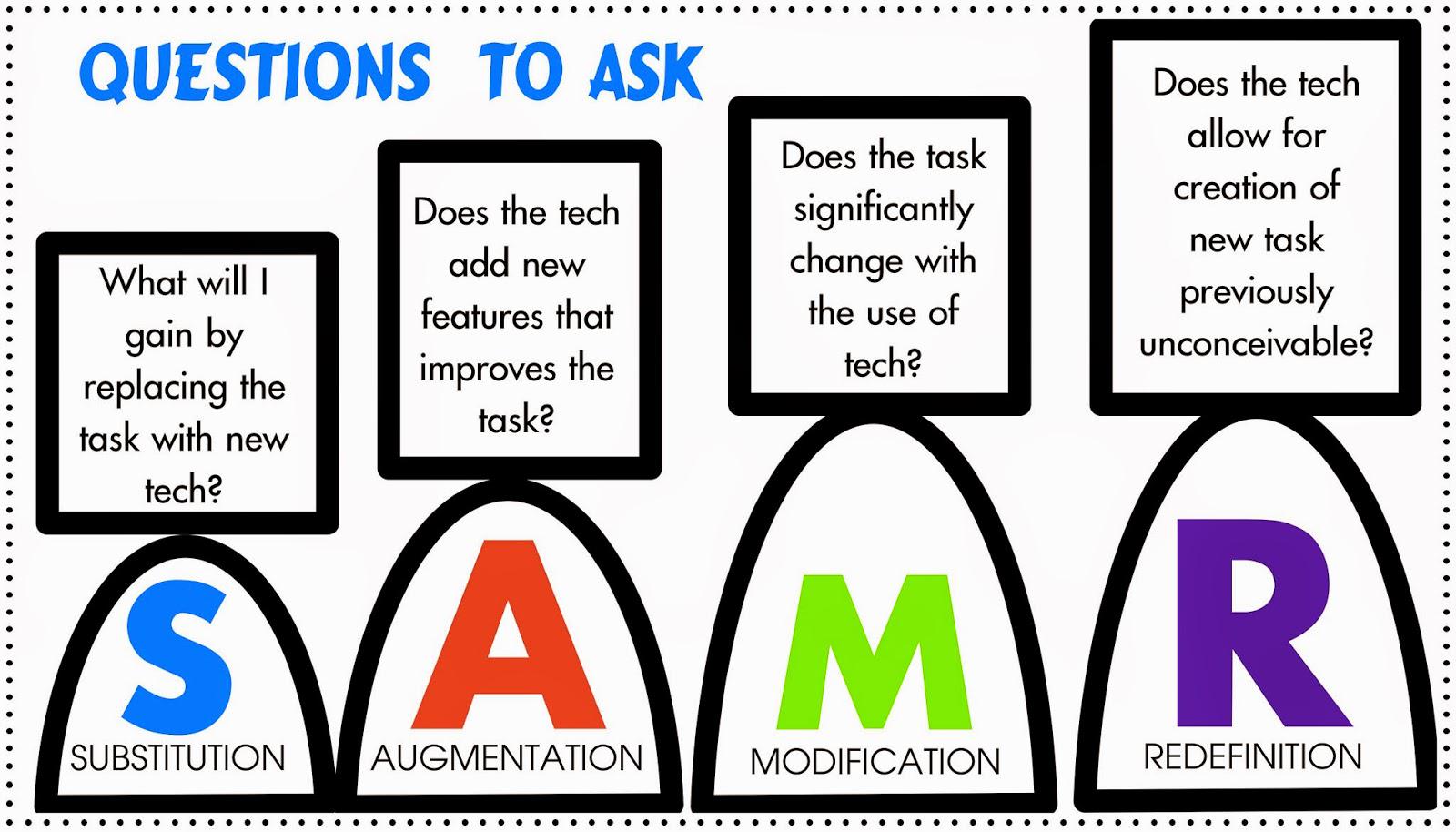
SAMR model


I use Twitter as an online learning environment, where I can keep up to date with new technologies, apps, websites while connecting with other NZ teachers. Today, I came across a post by @makerspaces.com, which has reminded me that the SAMR model is an effective design to refer to when planning to use iPads in the classroom. I am challenged to move from the substitution level to modification and redefinition. I think it is important to ask these questions consistently when planning learning activities.

An example of how I have used this model recently:

Students setting a learning goal.

At  the Substitution level, students could type up their goal and paste this into their books (using an iPad).

However,  at the Modification/Redefinition level, students recorded themselves in a video or Tellegami sharing their learning goal. They posted the video onto their blog, to share with parents, peers, teachers. Students are now able to comment on their own goal as they make progress in achieving it. In this way the technology has allowed for creation of a new task that was previously inconceivable.


Monday, 13 July 2015

Good teachers are not just well-oiled machines...

As I reflect on my first half of the year I am so excited to have chosen teaching as my career (even though I have qualified at 37 years old, some things are worth the wait).

"Good teachers are not just well-oiled machines. They are emotional, passionate beings who connect with their students and full their classes with pleasure, creativity, challenge and joy" (Hargreaves, 1998,  p. 835).


This quote resonates with me, because an effective teacher not only has an understanding of how to teach,  a knowledge of their students, an understanding of the curriculum and so much more... but it is an enthusiasm for teaching that brings the X-Factor to any classroom.  I know I am more passionate and excited to teach than I have ever been.

Rita Pierson (2013) expresses that"teaching and learning should bring joy" and that "every child deserves a champion, an adult who will never give up on them, who understands the power of connection, and insists that they become the best they can possibly be".


How can I champion my students to bring out the best in them?

  • build relationships
  • know my students (needs, interests)
  • respect their cultural heritages, languages, customs
  • have high expectations
  • be organised for learning
  • be relevant, authentic
  • be flexible
  • be committed to ongoing learning


Friday, 26 June 2015

Are we raising kids for now instead of yet?


Growth vs Fixed mindset (Carol Dweck)
http://www.ted.com/talks/carol_dweck_the_power_of_believing_that_you_can_improve?language=en

Are we raising kids for now instead of "yet"?
Are we raising kids obsessed with A's?
Are we raising kids to dream big dreams?
How can we build the bridge to "yet"?
Praise wisely (their effort, their strategies, their focus, their perseverance, their improvement)


I agree with Carol Dweck that having a mindset that believes you are capable, you can learn and grow is essential for my students.

How can I put this into practise in my teaching?

  • praise students wisely not on their talents but on their effort, improvement & progress
  • notice students who appear to have a fixed mindset and start finding ways to change this 
  • have a growth-mindset myself
  • speak to colleagues about how they foster growth-mindsets

Saturday, 20 June 2015

Reports for the first time !


Here's what:
Today I am starting to write reports for Room 13 (Literacy).

So what:
I am feeling nervous and excited to be reporting to parents/caregivers on their child's progress this year. I am planning on using OTJ's (Overall Teacher Judgement) from a variety of evidence to make my judgements. This includes classroom observations, results from Standarised tests (eAssTTle, schonell spelling, running records), anecdotal notes, draft writing and blog posts. In addition student's have taken some ownership of their learning by setting their own learning goal/s.

Now What:
Next step is parent/teacher/student conferences. I am feeling excited about being able to report to parents/caregivers, as I feel all the students in Room 13 have made significant progress this year. Parent interviews and conversations are important, and allow teacher, student and family to share information, celebrate achievements and to discuss next steps. 

Areas I feel I still need to develop:
  • Including the students more in their learning goals
  • Ensuring that the learning objectives are clear and unambiguous