A blog to collect my thoughts, reflections, inquiry learning... and so much more.
Thursday, 2 June 2016
Maths Club .... activating prior knowledge
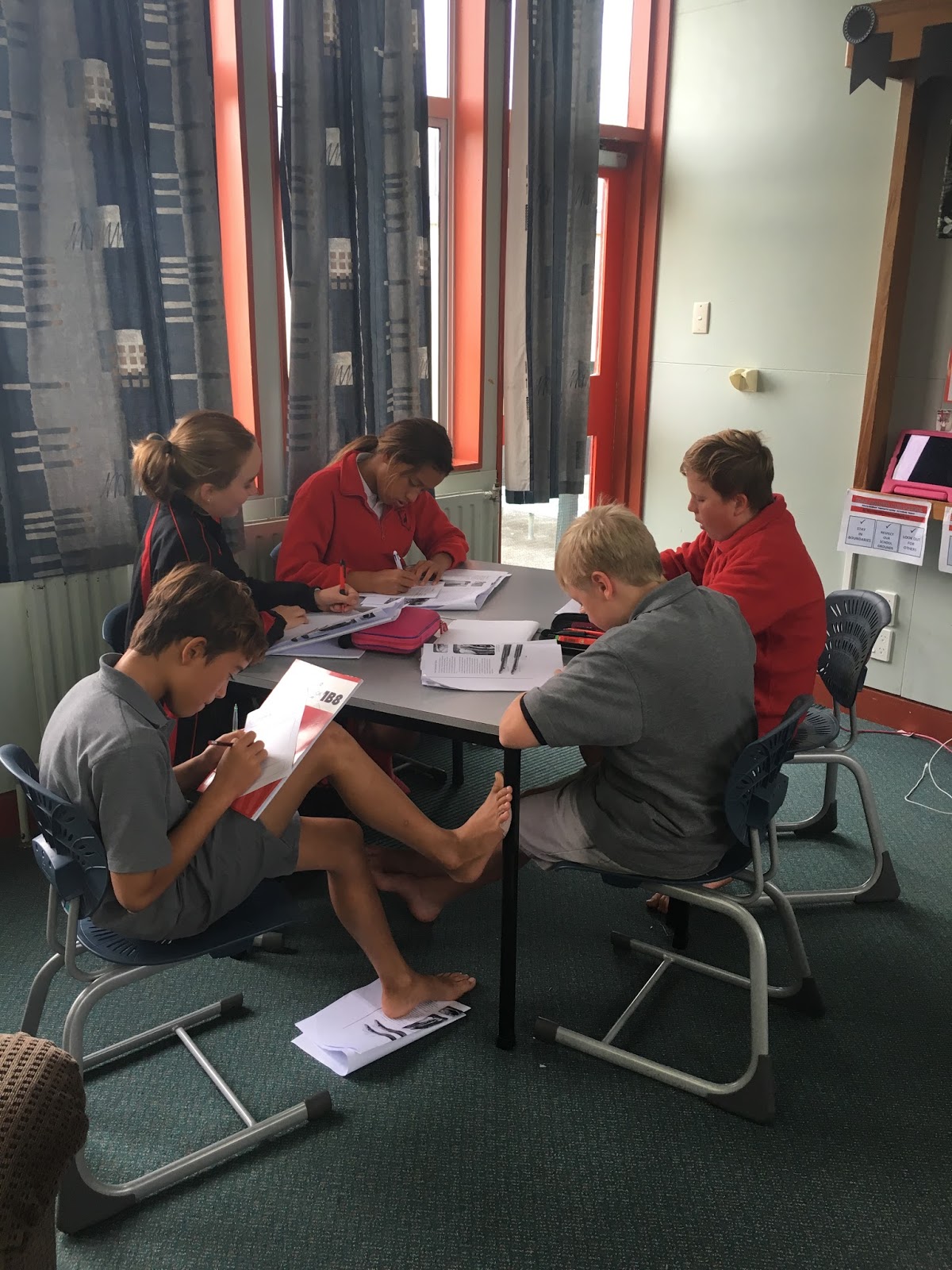
Working with target students at maths club today, we had a brainstorm about all that we knew about geometry, shapes, angles. The goal of the lesson was to introduce vocabulary will activating prior knowledge, to stimulate thinking and scaffold critical missing missing pieces of knowledge.
Tuesday, 31 May 2016
Literacy : comparing level 3 and 4 of NZC (Listening Reading Viewing)
Today in our team meetings we had a discussion about the differences between Level 3 and Level 4 of the NZC (Listening Reading Viewing strand)
Our thoughts ..
Our thoughts ..
Level 3 - From purposes/audiences to Structure: show developing….developing understanding...Level 4 shows an increasing. Understanding…
- Importance of being able to see the difference of developing and increasing.
- Examples: When reading a student at level 3 may refer to images/diagrams to support their reading. Whereas a student level 4 would be referring back to these images/diagrams to increase their understanding of the text eg. Water Bottle Rockets, students would be looking at diagrams or videos together with text to help them understand what they are reading.
- When reading a text/viewing images at level 3 uses their prior knowledge (text to text, text to self, text to world to help make meaning. Whereas Level 4 students are using their knowledge to help understand more complex ideas.
Thursday, 26 May 2016
Visit to Room 7... exploring geometry...
This week I visited Room 7 with observe Sally teaching Geometry. I thought that the idea of using Kadinsky Art as an exciting context for geometry would be a great for my class. Using the image below the lesson was to :
Encourage students to
examine the picture and discuss with their group and record what maths they can
see ( ie …circles, angles, perpendicular lines etc)
-
Students can also
complete a personal response to the painting too
-
Explore the maths
language that can be used to describe 2D shapes, lines and angles. Teach the
students about the different names that can be used to describe a square (
polygon, cuboid, square, parallelogram , quadrilateral, etc), circle etc.
-
Teach the different
angles / combinations of lines and then
repeat the art response with a different picture
-
Using plastic cut out
shapes have the students design their own Kandinsky inspired art work, with an
explanation of the maths used to create
it.
Now What:
I am looking forward to teaching geometry next week, and I will be using this lesson and adapting it to the learning needs of the students in my classroom.
Some key learning that has happened for me and that will benefit my students is that:
This lesson will activate students prior knowledge, and an opportunity to re-visit previous learning
I have a better understanding of the vocabulary needed to teach geometry. I am planning of giving students TIP sheets with the basic geometric shapes.
*** An idea - students could sort angles according to similarities and differences (Suzy Pepper Collins)
Monday, 23 May 2016
Maths Long Term Planning with Julia Tong
![]() |
| Some of the ideas we collaboratively shared about the mathematics that could be related to the Olympic games. |
My learning today:
Julia - encouraged us to get students to estimate. If you walk 10m in 5.34 seconds. Estimate how long it will take you to walk 20m or 100m.
Ask students how they worked that out.
Tuesday, 17 May 2016
Science collaborative planning
With a Science Fair ahead we have planned for integrated learning opportunities this term. In addition I have enjoyed planning literacy learning/tasks collaboratively with colleagues. We are supporting each other with resources, plans and ideas. As we think of learning tasks that are authentic and enraging for our students we have chosen a variety of learning opportunities.
Tuesday, 10 May 2016
Literacy Circles
Today we had the pleasure of a visit from some amazing students in Room 8. They came to show us the different roles of Literacy Circles. We look forward to putting these new skills into practise tomorrow.
I was able to observe students and a colleague teaching/modelling the Literacy Circles. Thereby actively engaging in respectful relationships with students, peers and colleagues. At the same time initiating learning opportunities to advance my professional knowledge and skills.
| The Illustrator draws their own interpretation of a section of the text. |
| The Word Master selects key vocabulary from the text. |
Labels:
collaboration,
inclusion,
mentor,
PTC1,
PTC4,
PTC7,
RTC12,
ZoeyandJaneen
Thursday, 5 May 2016
Gafesummit 2016
Here's what:
I attended a 2 day GAFE (Google Apps for Education) summit in Wellington in the holidays.
So What:
Professional learning development included:

Now What:
I attended a 2 day GAFE (Google Apps for Education) summit in Wellington in the holidays.
So What:
Professional learning development included:

- Practical skills to use Google Classroom
- Skills to teach and use coding using Google CS
- Genius hour
- Effective use of slides, forms
- Breakout Edu - challenging games
- Use of Cinematography/Digital Storytelling
- Using Google for administration in schools
- Google extensions - Bit Moji
What stuck with me was a clear message by the key note speakers that encouraged us as teachers to enable students to think of using technology for a message beyond an audience of one. And to think about how a video, blog, podcast by a student/s could impact their community and beyond.
Now What:
I want to think about ways in which I can enable my student to use technology Responsibility and how they can have their "Voice" or story impact others.
I plan to use google docs, drive, forms, slides more effectively in the classroom.
Subscribe to:
Posts (Atom)